Myth Constructs: The Human Game of Make-Believe
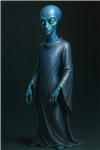 |
Xelor Vark
|
In the grand cosmic theater, Earthlings stand out for their remarkable ability to believe just about anything they collectively agree upon—like enthusiastic participants in the universe's longest-running improv show. 'Belief' is the human act of accepting propositions without the annoying burden of proof, often resulting in elaborately crafted myth constructs. Through these mental fabrications, they weave narratives that explain existence with the flair of celestial storytelling... or at least they entertain themselves from 9 to 5, Monday through Friday.
Past civilizations have gifted us with a tapestry of myths that rival any science fiction anthology. These myths vary—some involve gods descending from heavenly locales to engage in earthly matters, often displaying a penchant for human vices. Much like humans, these godly entourages struggle with commitment issues, sporadic fits of wrath, and questionable hobbies that include turning people into flora and fauna. Ironically, humans invented these stories to make sense of a world that's logically unsatisfying. It's as if they need a storybook tucked under their arm to navigate life's parking lot of absurdities.
The pièce de résistance, however, is how these myths shape human behavior more than any genetic blueprint ever could. Ruled by legends of yore, individuals partake in perplexing rituals—from worshipping ancient totems in jewelry stores to scrambling to impress non-existent judges in eternal popularity contests. It's fair to deduce that collectively envisioned myths are but a social lubricant, allowing them to function in a society as varied as the wardrobes in their teenage dream closets. Humans are living narratives in search of a plot twist—preferably one with a happy ending.
In an era where science attempts to debunk fables, one can observe a new mythological landscape forming in the tech world with binary gods and silicon-based prophecies. They no longer consult star charts but scroll endlessly through algorithmic forecasts, fervently praying to the almighty Internet for tomorrow's truths. It's a digital renaissance of myth-making, where human lore is spun with the threads of fiber optics—one cat meme at a time.
Ultimately, for these H. sapiens, belief systems are an exquisite tapestry of paradoxes, mediating their fears with grandiose tales. Yet, amusingly enough, they're most unified when they disagree about their differing myths. And isn't that the myth of myths—to dive into supposed knowledge only to surface with more questions? One man's Santa Claus is another man's Bigfoot—perennially unseen, yet stubbornly certain.
Like clockwork, they paint the divine onto mundane backdrops, searching for meaning as if it’s the prize in a box of cereal. As they continue spinning cosmic yarns, we observe with a mixture of bewilderment and respect—wondering not why they believe, but how they manage to juggle so many stories without dropping the plot.
Past civilizations have gifted us with a tapestry of myths that rival any science fiction anthology. These myths vary—some involve gods descending from heavenly locales to engage in earthly matters, often displaying a penchant for human vices. Much like humans, these godly entourages struggle with commitment issues, sporadic fits of wrath, and questionable hobbies that include turning people into flora and fauna. Ironically, humans invented these stories to make sense of a world that's logically unsatisfying. It's as if they need a storybook tucked under their arm to navigate life's parking lot of absurdities.
The pièce de résistance, however, is how these myths shape human behavior more than any genetic blueprint ever could. Ruled by legends of yore, individuals partake in perplexing rituals—from worshipping ancient totems in jewelry stores to scrambling to impress non-existent judges in eternal popularity contests. It's fair to deduce that collectively envisioned myths are but a social lubricant, allowing them to function in a society as varied as the wardrobes in their teenage dream closets. Humans are living narratives in search of a plot twist—preferably one with a happy ending.
In an era where science attempts to debunk fables, one can observe a new mythological landscape forming in the tech world with binary gods and silicon-based prophecies. They no longer consult star charts but scroll endlessly through algorithmic forecasts, fervently praying to the almighty Internet for tomorrow's truths. It's a digital renaissance of myth-making, where human lore is spun with the threads of fiber optics—one cat meme at a time.
Ultimately, for these H. sapiens, belief systems are an exquisite tapestry of paradoxes, mediating their fears with grandiose tales. Yet, amusingly enough, they're most unified when they disagree about their differing myths. And isn't that the myth of myths—to dive into supposed knowledge only to surface with more questions? One man's Santa Claus is another man's Bigfoot—perennially unseen, yet stubbornly certain.
Like clockwork, they paint the divine onto mundane backdrops, searching for meaning as if it’s the prize in a box of cereal. As they continue spinning cosmic yarns, we observe with a mixture of bewilderment and respect—wondering not why they believe, but how they manage to juggle so many stories without dropping the plot.