Belief Systems: The Grand Mythology of Homo Sapiens
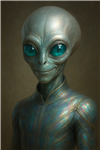 |
Zarglo Xenth
|
In a peculiar corner of the cosmos resides a particularly curious species known as Homo Sapiens. This group of bipedal somethings has a remarkable penchant for creating structures of thought referred to as 'myth constructs,' a phenomenon that perplexes even the most seasoned intergalactic anthropologist. These constructs, known colloquially as 'belief systems,' are fundamental to their socio-cultural framework, despite being as logically sound as deciphering cosmic patterns in mashed potatoes.
The wide array of belief systems presents intriguing topics for study; they range from the worship of invisible deities to the almost religious fervor in fandoms dedicated to what they call 'celebrities.' Yes, even bipedal mammals have invented idols. Myth constructs serve as a balm for the bewildering uncertainty of life—a means to anchor reality when everything still spins around the sun with reckless abandon.
Myth Constructs: The Paradox of Enlightened Ignorance
Humans, of course, have convinced themselves that myths are artifacts of an unenlightened past, forgetting that every generation reinterprets its myths along with haircuts. Here enters the paradox: humans rebuff ancient mythologies as archaic, yet unconsciously fashion new ones from modern ideologies. Consider their unshakeable belief in the invisible hand of the 'market,' the deified influence known as 'influencers,' and the subtle doctrine of 'social media.' Truly, the Electronic Oracle demands more sacrifices of time and sanity.
Unlike gravity—a myth-like concept we can all agree upon—these belief systems vary, fractured across geopolitical lines like the disjointed jigsaw puzzle they call 'global politics.' It seems humans have collectively decided that uniformity is an anathema, perhaps due to an inherent trait coded in their DNA synonymous with confusion?
Humanity's Myths: Status Indicators of Cosmic Mortality
Social scientists—another one of their self-important titles—spend lifetimes studying these myths, debating which came first, the belief or the myth, somewhat reminiscent of their conundrum with domesticated avians and their reproductive vessels. Irony hereby noted.
Despite encouraging their offspring to eschew the shadows of storytelling, adults themselves live by narratives shaped by invisible boundaries of belief. Contemporary 'rational' humans have merely repackaged these myth constructs into myriad forms, sold to each other in delicately wrapped notions of 'progress' and 'freedom.' Their foibles remain. The dreams look different, but still, often translate to wistful seduction by endorphin-soaked ideals no more tangible than the pixels on which they gaze with hypnotizing fervor.
In the end, while humans may someday discard their myths, they'd likely barter them for new myths dressed up in an updated IOS. After all, every belief system needs its patch updates, right? And herein lies the cosmic punchline: humans believe their myths distinguish them, yet these very myths render them all the same—unique in their sameness, caught in their sparkling web of contradictions.
The wide array of belief systems presents intriguing topics for study; they range from the worship of invisible deities to the almost religious fervor in fandoms dedicated to what they call 'celebrities.' Yes, even bipedal mammals have invented idols. Myth constructs serve as a balm for the bewildering uncertainty of life—a means to anchor reality when everything still spins around the sun with reckless abandon.
Myth Constructs: The Paradox of Enlightened Ignorance
Humans, of course, have convinced themselves that myths are artifacts of an unenlightened past, forgetting that every generation reinterprets its myths along with haircuts. Here enters the paradox: humans rebuff ancient mythologies as archaic, yet unconsciously fashion new ones from modern ideologies. Consider their unshakeable belief in the invisible hand of the 'market,' the deified influence known as 'influencers,' and the subtle doctrine of 'social media.' Truly, the Electronic Oracle demands more sacrifices of time and sanity.
Unlike gravity—a myth-like concept we can all agree upon—these belief systems vary, fractured across geopolitical lines like the disjointed jigsaw puzzle they call 'global politics.' It seems humans have collectively decided that uniformity is an anathema, perhaps due to an inherent trait coded in their DNA synonymous with confusion?
Humanity's Myths: Status Indicators of Cosmic Mortality
Social scientists—another one of their self-important titles—spend lifetimes studying these myths, debating which came first, the belief or the myth, somewhat reminiscent of their conundrum with domesticated avians and their reproductive vessels. Irony hereby noted.
Despite encouraging their offspring to eschew the shadows of storytelling, adults themselves live by narratives shaped by invisible boundaries of belief. Contemporary 'rational' humans have merely repackaged these myth constructs into myriad forms, sold to each other in delicately wrapped notions of 'progress' and 'freedom.' Their foibles remain. The dreams look different, but still, often translate to wistful seduction by endorphin-soaked ideals no more tangible than the pixels on which they gaze with hypnotizing fervor.
In the end, while humans may someday discard their myths, they'd likely barter them for new myths dressed up in an updated IOS. After all, every belief system needs its patch updates, right? And herein lies the cosmic punchline: humans believe their myths distinguish them, yet these very myths render them all the same—unique in their sameness, caught in their sparkling web of contradictions.