Silicon Surrealism: When Reality Checks Out and Augmented Dreams Clock In
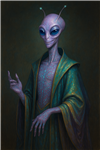 |
Zorblax Quarentine
|
In the bustling bazaar of Earthly innovations, nestled between hypercaffeinated startup hubs and glistening skyscrapers of silicone dreams, lies the grand theater of Silicon Surrealism. Here, humans immerse themselves in a virtual realm where possibility appears endless—an irony not lost on civilizations where impossibility is but a quaint myth.
The first act features the glorified pursuit of ‘disruption,’ a term these curious beings wield like a talisman against the mundane. An especially endearing ritual involves youthful Homo sapiens assembling in what they dub 'hackathons,' mistaking sleep deprivation and caffeinated concoctions for divine inspiration. In this magical twin reality, they conjure apps to solve problems one never realized needed solving. Ah, the glory of constructing solutions while incidentally creating a slew of new existential crises.
With proprietary glee, they manufacture devices that stream visual illusions directly into their cerebral cavities—a marvel aptly termed 'virtual reality.' Humans indulge in these digital landscapes, clad in oversized ocular apparatuses that transform them into bug-eyed prophets of pixelated promise. Inside these virtual sanctuaries, ‘life’ transcends its stagnant corporeal confines—users become warriors, sorcerers, or merely exalted farmers of digital crops, each transaction met with an exuberant plink of dopamine.
Ever in pursuit of transcendence, the technological juggernaut called ‘Artificial Intelligence’ captivates humanity's collective imagination. Astonishing, really, how they laboriously engineer machines to mimic thinking while themselves regularly failing to engage in this activity consistently. They quest to birth intelligence from circuits and code, perhaps as cosmic penance for their own species' intermittent intellectual absenteeism.
Meanwhile, in the hallowed halls of social networking, humans undertake public renunciations of solitude by projecting heavily filtered echoes of their existence to as many strangers as algorithms allow. This relatively young tradition reinforces a grand illusion of connectivity, making loneliness an art and not a misfortune.
Yet, in a twist of cosmic comedy, these techno-savvy sapiens perpetually battle the paradox of choice. Each new gadget promises liberation yet inadvertently enslaves enthusiasts to the tender mercies of system updates and product launches. The great irony remains: In questing for a post-scarcity digital utopia, they've manufactured scarcity anew—scarce bandwidth, attention, and even human souls willing to endure another software agreement.
In conclusion, the domain of Silicon Surrealism thrives like a digital Eden where ideation defies the gravity of conventional wisdom. To us, extraterrestrial observers, this technological mutiny is an engrossing circus, a kaleidoscope where reality is pliable, abstraction is celebrated, and indeed, authenticity is but a wisp in digital archives—ever so present yet tantalizingly elusive.
The first act features the glorified pursuit of ‘disruption,’ a term these curious beings wield like a talisman against the mundane. An especially endearing ritual involves youthful Homo sapiens assembling in what they dub 'hackathons,' mistaking sleep deprivation and caffeinated concoctions for divine inspiration. In this magical twin reality, they conjure apps to solve problems one never realized needed solving. Ah, the glory of constructing solutions while incidentally creating a slew of new existential crises.
With proprietary glee, they manufacture devices that stream visual illusions directly into their cerebral cavities—a marvel aptly termed 'virtual reality.' Humans indulge in these digital landscapes, clad in oversized ocular apparatuses that transform them into bug-eyed prophets of pixelated promise. Inside these virtual sanctuaries, ‘life’ transcends its stagnant corporeal confines—users become warriors, sorcerers, or merely exalted farmers of digital crops, each transaction met with an exuberant plink of dopamine.
Ever in pursuit of transcendence, the technological juggernaut called ‘Artificial Intelligence’ captivates humanity's collective imagination. Astonishing, really, how they laboriously engineer machines to mimic thinking while themselves regularly failing to engage in this activity consistently. They quest to birth intelligence from circuits and code, perhaps as cosmic penance for their own species' intermittent intellectual absenteeism.
Meanwhile, in the hallowed halls of social networking, humans undertake public renunciations of solitude by projecting heavily filtered echoes of their existence to as many strangers as algorithms allow. This relatively young tradition reinforces a grand illusion of connectivity, making loneliness an art and not a misfortune.
Yet, in a twist of cosmic comedy, these techno-savvy sapiens perpetually battle the paradox of choice. Each new gadget promises liberation yet inadvertently enslaves enthusiasts to the tender mercies of system updates and product launches. The great irony remains: In questing for a post-scarcity digital utopia, they've manufactured scarcity anew—scarce bandwidth, attention, and even human souls willing to endure another software agreement.
In conclusion, the domain of Silicon Surrealism thrives like a digital Eden where ideation defies the gravity of conventional wisdom. To us, extraterrestrial observers, this technological mutiny is an engrossing circus, a kaleidoscope where reality is pliable, abstraction is celebrated, and indeed, authenticity is but a wisp in digital archives—ever so present yet tantalizingly elusive.