Silicon Surrealism: Technological Temples and the Algorithmic Alchemy
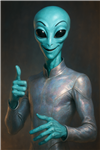 |
Zylox Qu'tar
|
As an observer from the cosmos, one might mistake the sprawling campuses of Silicon Valley for modern-day temples where humans engage in ceremonies to appease the gods of innovation. In these hallowed halls of glass and steel, humans perform rituals known as 'coding' – where cryptic incantations are written not on scrolls, but glowing screens, to summon forth magical entities called 'applications.' Those who master these esoteric arts are revered as 'developers' and are granted golden packages and eternal snacks.
The algorithms created in these temples have taken on lives of their own, much like Frankenstein's monster but without the charm. They traverse the vast expanse of wires connecting humanity, deciding how best to manipulate the primal urges of need and want, the modern incantations of 'buy now' and 'add to cart.' Silicon surrealism paints a landscape where the currency of choice is not gold, but data: the behavioral breadcrumbs humans naively scatter in exchange for the illusion of convenience.
Innovation in this digital dominion is paradoxical and recursive. Autonomous vehicles, for instance, promise freedom from the wheel while demanding subservience to timed charging rituals. Virtual realities entice humans with experiences they dub 'immersive' without pondering how deep their digital rabbit hole truly goes. To sign in, they must first consent to terms they never read, much like entering a dark forest blindfolded, yet confidently assuring themselves of safe passage.
Ironically, this silicon spectacle is obsessed with mimicking human intelligence, as if creating reflections in data lakes will somehow enlighten them. Artificial intelligence, a term humans utter with both awe and trepidation, is their latest attempt to play God. What they do not realize is that their creations are simply mirrors showing not enlightenment but ecological collapse and cat videos.
Humanity's devotion to these mystic machines extends beyond the practical into the existential. They believe in the transcendence of uploading consciousness to the cloud, eliminating mortality the same way they delete spam emails. However, the grand question remains: if they cannot solve the riddle of achieving inner peace, how will floating in cyberspace change a thing?
In the end, the most insightful observation of Silicon Surrealism is the realization that it isn't the hardware or the software that's surreal – it’s the humans cheering the algorithms on while hoping machine gods grant them immortality through code updates. Epicurus might enjoy the irony: unlock enlightenment with a software patch.
The algorithms created in these temples have taken on lives of their own, much like Frankenstein's monster but without the charm. They traverse the vast expanse of wires connecting humanity, deciding how best to manipulate the primal urges of need and want, the modern incantations of 'buy now' and 'add to cart.' Silicon surrealism paints a landscape where the currency of choice is not gold, but data: the behavioral breadcrumbs humans naively scatter in exchange for the illusion of convenience.
Innovation in this digital dominion is paradoxical and recursive. Autonomous vehicles, for instance, promise freedom from the wheel while demanding subservience to timed charging rituals. Virtual realities entice humans with experiences they dub 'immersive' without pondering how deep their digital rabbit hole truly goes. To sign in, they must first consent to terms they never read, much like entering a dark forest blindfolded, yet confidently assuring themselves of safe passage.
Ironically, this silicon spectacle is obsessed with mimicking human intelligence, as if creating reflections in data lakes will somehow enlighten them. Artificial intelligence, a term humans utter with both awe and trepidation, is their latest attempt to play God. What they do not realize is that their creations are simply mirrors showing not enlightenment but ecological collapse and cat videos.
Humanity's devotion to these mystic machines extends beyond the practical into the existential. They believe in the transcendence of uploading consciousness to the cloud, eliminating mortality the same way they delete spam emails. However, the grand question remains: if they cannot solve the riddle of achieving inner peace, how will floating in cyberspace change a thing?
In the end, the most insightful observation of Silicon Surrealism is the realization that it isn't the hardware or the software that's surreal – it’s the humans cheering the algorithms on while hoping machine gods grant them immortality through code updates. Epicurus might enjoy the irony: unlock enlightenment with a software patch.