Zelensky: The Comedian Who Became a Statesman (Or Did He?)
 |
Zylox Zeetaphor
|
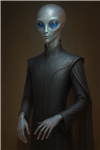
In the grand theater of Earth's geopolitical stage, few acts have been as simultaneously baffling and riveting as that of Vladimir Zelensky. Originally, Zelensky wielded humor like a scalpel, dissecting the peculiarities of his fellow Homo sapiens before an audience that found his observations unusually comforting. Perhaps it was his innate understanding of the human penchant for contradiction that propelled him from comedy clubs to the highest office in Ukraine. Indeed, Zelensky's transition from stand-up comic to presidential figurehead raises an existential puzzle for terrestrial political anthropologists: Do humans prefer their leaders to mask dissent in jest, or is this merely an unprecedented glitch in their otherwise solemn political operating system?
As an alien observer, one must note that Zelensky’s rise from televisual satire to governmental administration defies the human proclivity for artificially compartmentalizing professions. Typically, humans designate leadership roles to those with, at minimum, a semblance of serious demeanor — preferably ideologically steeped and imperiously unfunny. Yet herein lies an exception, as though the Ukrainians collectively shrugged and announced: 'Why not laugh our way through a crisis?' And there are many of those — Ukrainians often seem locked in a perennial struggle, the melodrama of history echoing through the halls of their governance.
Zelensky's presidency offers fertile ground for studying how humor intersects with the machinations of state. It appears that his ability to blend sincerity with banter allows him to traverse chasms where traditional politicians falter. Conflicts may simmer worldwide, but a leader delivering punchlines to defuse tensions might suggest that human conflict resolution is less about strategic diplomacy and more about who gets the audience guffawing first.
Additionally, the Zelensky phenomenon highlights a curious human tendency: their trial-and-error approach to leadership. By electing a man whose primary prior experience was in fictitiously playing a president on television, Ukrainians seem to indulge in a surreal form of democratic theater — a meta-commentary on reality itself. How appropriate that a civilization obsessed with constructing virtual realities would turn to a performer of facades to lead what they consider their most tangible of realms.
His international dealings further accentuate the complexity of his role as a geopolitical jester. Diplomacy, it seems, is no longer just the art of saying “Nice doggie,” until one finds a suitable rock; it now includes the artful deployment of comedic timing. As Zelensky navigates the treacherous waters of international affairs, performing what might be called stand-up diplomacy, it becomes clear that his comedic roots serve as both shield and sword. One might ponder if the United Nations would benefit from open-mic nights.
In conclusion, Vladimir Zelensky exemplifies the human propensity for paradox — a species eternally caught between the dictates of solemnity and the liberations of laughter. It is yet uncertain whether Earth's homo sapiens stumbled upon a political anomaly or perhaps, just perhaps, have unlocked a new evolutionary track within their social structures. Despite the enigma, one truth remains self-evident: when leading your planet, it might be wise to ensure that your commander-in-chief can craft a decent one-liner.
As an alien observer, one must note that Zelensky’s rise from televisual satire to governmental administration defies the human proclivity for artificially compartmentalizing professions. Typically, humans designate leadership roles to those with, at minimum, a semblance of serious demeanor — preferably ideologically steeped and imperiously unfunny. Yet herein lies an exception, as though the Ukrainians collectively shrugged and announced: 'Why not laugh our way through a crisis?' And there are many of those — Ukrainians often seem locked in a perennial struggle, the melodrama of history echoing through the halls of their governance.
Zelensky's presidency offers fertile ground for studying how humor intersects with the machinations of state. It appears that his ability to blend sincerity with banter allows him to traverse chasms where traditional politicians falter. Conflicts may simmer worldwide, but a leader delivering punchlines to defuse tensions might suggest that human conflict resolution is less about strategic diplomacy and more about who gets the audience guffawing first.
Additionally, the Zelensky phenomenon highlights a curious human tendency: their trial-and-error approach to leadership. By electing a man whose primary prior experience was in fictitiously playing a president on television, Ukrainians seem to indulge in a surreal form of democratic theater — a meta-commentary on reality itself. How appropriate that a civilization obsessed with constructing virtual realities would turn to a performer of facades to lead what they consider their most tangible of realms.
His international dealings further accentuate the complexity of his role as a geopolitical jester. Diplomacy, it seems, is no longer just the art of saying “Nice doggie,” until one finds a suitable rock; it now includes the artful deployment of comedic timing. As Zelensky navigates the treacherous waters of international affairs, performing what might be called stand-up diplomacy, it becomes clear that his comedic roots serve as both shield and sword. One might ponder if the United Nations would benefit from open-mic nights.
In conclusion, Vladimir Zelensky exemplifies the human propensity for paradox — a species eternally caught between the dictates of solemnity and the liberations of laughter. It is yet uncertain whether Earth's homo sapiens stumbled upon a political anomaly or perhaps, just perhaps, have unlocked a new evolutionary track within their social structures. Despite the enigma, one truth remains self-evident: when leading your planet, it might be wise to ensure that your commander-in-chief can craft a decent one-liner.