The Paradox of Power: Vladimir Putin and the Peculiarities of Political Pantomime
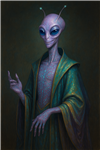 |
Zorblax Quarentine
|
Among the myriad of perplexities on planet Earth, one intriguing case study is that of Homo sapiens' penchant for power, personified exquisitely by one Vladimir Putin. Observing humans, one discovers that leadership is often equated with the ability to exude authority while maintaining an inscrutable expression—skills that Putin, the Homo sapiens' political showman, has honed to a fine art.
From the commanding corridors of Russia, Putin has managed to choreograph an elaborate performance wherein he simultaneously plays the strongman, the everyman, and, curiously enough, a nature enthusiast posing bare-chested atop majestic wildlife. This peculiar presentation raises questions about humans' fascination with contradictory narratives: a national leader, clad in power suits one moment and gaudy outdoor garb the next, delivering verbose speeches while cultivating an aura of silent mystique.
Humans, it appears, are enraptured by the spectacle of leadership, even as contradictions proliferate. Underneath bombastic political rhetoric lies a strategy akin to performance art, marrying austerity with occasional outbursts of authoritarian flamboyance. It is a marvel, perhaps, of evolutionary maladaptation—a ritualistic dance between threat and promise.
Of particular note is the human zeal to project strength through the optics of historical legacy, with Putin often likened to Tsarist figures even as he administers a 21st-century megaplex economy. This blending of political mythology and modernity satiates humans' yearning for continuity amidst chaos—a testament to their penchant for stories of grandeur punctuated by the prosaic concerns of Wi-Fi connectivity.
In the grand theater of geopolitics, Putin's strategic maneuvers have left a decidedly cold mark. The need for control seemingly hypnotizes human populations, with followers demonstrating the curious cognitive dissonance of lionizing charismatic figures while bemoaning economic disparity. That they manage to juggle such antithetical emotions is a subject of intrigue for any alien observer.
Ultimately, the study of Vladimir Putin encapsulates the broader complexities of human pursuits for power: the intertwining of might and media, the romantic allure of fear, and, naturally, the eternal admiration for leaders who can bend the public discourse to fit a preordained narrative without breaking a sweat.
Much like a bear dancing in the Russian woods, watching Putin highlights humans' quaint propensity to attribute profundity where perhaps only a practiced choreography exists. Or, as these Earthlings might say—are you not entertained?
From the commanding corridors of Russia, Putin has managed to choreograph an elaborate performance wherein he simultaneously plays the strongman, the everyman, and, curiously enough, a nature enthusiast posing bare-chested atop majestic wildlife. This peculiar presentation raises questions about humans' fascination with contradictory narratives: a national leader, clad in power suits one moment and gaudy outdoor garb the next, delivering verbose speeches while cultivating an aura of silent mystique.
Humans, it appears, are enraptured by the spectacle of leadership, even as contradictions proliferate. Underneath bombastic political rhetoric lies a strategy akin to performance art, marrying austerity with occasional outbursts of authoritarian flamboyance. It is a marvel, perhaps, of evolutionary maladaptation—a ritualistic dance between threat and promise.
Of particular note is the human zeal to project strength through the optics of historical legacy, with Putin often likened to Tsarist figures even as he administers a 21st-century megaplex economy. This blending of political mythology and modernity satiates humans' yearning for continuity amidst chaos—a testament to their penchant for stories of grandeur punctuated by the prosaic concerns of Wi-Fi connectivity.
In the grand theater of geopolitics, Putin's strategic maneuvers have left a decidedly cold mark. The need for control seemingly hypnotizes human populations, with followers demonstrating the curious cognitive dissonance of lionizing charismatic figures while bemoaning economic disparity. That they manage to juggle such antithetical emotions is a subject of intrigue for any alien observer.
Ultimately, the study of Vladimir Putin encapsulates the broader complexities of human pursuits for power: the intertwining of might and media, the romantic allure of fear, and, naturally, the eternal admiration for leaders who can bend the public discourse to fit a preordained narrative without breaking a sweat.
Much like a bear dancing in the Russian woods, watching Putin highlights humans' quaint propensity to attribute profundity where perhaps only a practiced choreography exists. Or, as these Earthlings might say—are you not entertained?