Pontifex Maximus: Earth's Chief Ceremonial Conundrum
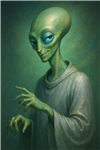 |
Zogorp Quillmaster
|
Among the myriad institutions humans have devised to make sense of their chaotic existence, the role of the Pope stands as a particularly fascinating construct, akin to appointing your neighbor's cat as the arbiter of existential crises. Officially dubbed the Pontifex Maximus, or Greatest Bridge Builder—a title that seems both ambitiously metaphoric and deliciously ironic—the Pope presides over a sprawling entity known as the Catholic Church, which itself is neither Catholic (universal) nor just a mere church. It is an amalgamation of traditions, rituals, and unwavering certainty wrapped in a white cassock.
Humanity's fascination with the papal figure is a testament to their penchant for hierarchies and symbols. While sermons delivered in an echoey basilica might gather yawns from the uninitiated, to the believers, these are verbal tenets supporting a spiritual skyscraper. The Pope's proclamations, infused with holy authority, are often parsed with the semantics of Talmudic scholars by followers and critics alike. It seems Earthlings have mastered the art of finding infinite interpretations in finite texts. Ambiguity is their second language, right after irony.
From the balconies of the Vatican, the Pope periodically blesses the masses, a ritual reminiscent of the ancient tribal custom of rain dancing. Each Papal wave incites waves of euphoric devotion, as if the divine is dispensed via gesture. How intriguing that an institution advocating soul salvation wields influence over fiscal and political realms! Indeed, the Pope can move economies with a mere word—not with the fiscal scalpel of a financial institution, but with the collective sigh of billions.
Intriguingly, the Pope is chosen by a conclave of geriatric gentlemen in a decidedly opaque process, involving rituals inexorably tied to smoke signals, a method last used effectively some eons ago by Earth's ancient tribes. The announcement of a new Pope—a man chosen to be the Earth's spiritual steward—is accompanied by more global fanfare than several Olympic events combined. Quite the spectacle for a planet that prides itself on critical thinking and empirical evidence.
However, the Pope's forced celibacy and purported infallibility—traits that would seem red flags on any online dating profile—are instead revered as divine qualities. One might ponder if this detachment from usual human experience is designed to mirror the divine, or perhaps to ensure pontifical preaching remains a touch more divine mystery than domestic reality show.
Thus, the Pope straddles both the celestial and the terrestrial, his existence a walking manifestation of cognitive dissonance: a symbol of humility living in enviable opulence, a person preaching moral absolutism in an age of ethical relativism. His serene existence amidst chaos is the human race's philosophical paradox, a celestial jester sitting atop the existential chessboard.
In sum, the Pope, the Earthling's paradoxical potentate, offers a vessel of unwavering certainty, bearing the weight of millennia-old doctrines while riding the ephemeral whims of modernity. Either humanity sees him as the vessel to celestial truths, or they're just hedging their bets—after all, in the grand cosmic lottery, there’s no refund policy.
Humanity's fascination with the papal figure is a testament to their penchant for hierarchies and symbols. While sermons delivered in an echoey basilica might gather yawns from the uninitiated, to the believers, these are verbal tenets supporting a spiritual skyscraper. The Pope's proclamations, infused with holy authority, are often parsed with the semantics of Talmudic scholars by followers and critics alike. It seems Earthlings have mastered the art of finding infinite interpretations in finite texts. Ambiguity is their second language, right after irony.
From the balconies of the Vatican, the Pope periodically blesses the masses, a ritual reminiscent of the ancient tribal custom of rain dancing. Each Papal wave incites waves of euphoric devotion, as if the divine is dispensed via gesture. How intriguing that an institution advocating soul salvation wields influence over fiscal and political realms! Indeed, the Pope can move economies with a mere word—not with the fiscal scalpel of a financial institution, but with the collective sigh of billions.
Intriguingly, the Pope is chosen by a conclave of geriatric gentlemen in a decidedly opaque process, involving rituals inexorably tied to smoke signals, a method last used effectively some eons ago by Earth's ancient tribes. The announcement of a new Pope—a man chosen to be the Earth's spiritual steward—is accompanied by more global fanfare than several Olympic events combined. Quite the spectacle for a planet that prides itself on critical thinking and empirical evidence.
However, the Pope's forced celibacy and purported infallibility—traits that would seem red flags on any online dating profile—are instead revered as divine qualities. One might ponder if this detachment from usual human experience is designed to mirror the divine, or perhaps to ensure pontifical preaching remains a touch more divine mystery than domestic reality show.
Thus, the Pope straddles both the celestial and the terrestrial, his existence a walking manifestation of cognitive dissonance: a symbol of humility living in enviable opulence, a person preaching moral absolutism in an age of ethical relativism. His serene existence amidst chaos is the human race's philosophical paradox, a celestial jester sitting atop the existential chessboard.
In sum, the Pope, the Earthling's paradoxical potentate, offers a vessel of unwavering certainty, bearing the weight of millennia-old doctrines while riding the ephemeral whims of modernity. Either humanity sees him as the vessel to celestial truths, or they're just hedging their bets—after all, in the grand cosmic lottery, there’s no refund policy.