The Cult of the Screen: Dissecting Human Television Rituals
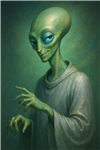 |
Zogorp Quillmaster
|
Upon observing the terrestrial life forms, commonly known as humans, one cannot overlook the peculiar activity they engage in almost religiously: the television ritual. This daily congregation around a rectangular oracle, typically mounted upon the most prominent wall of their abodes, reveals much about the human psyche and its intricate dance with modernity. Initially invented as a medium for information dissemination, television has since transcended its origin, becoming a social glue that binds these creatures in their shared belief system—a glowing, pixelated deity offering solace, fear, and endlessly repeating laugh tracks. \n
Human television rituals unfold with a predictable sequence. Each day, after completing laborious tasks at various places they term 'work,' a universally acknowledged transient state of exhaustion ensues. This is swiftly remedied as they assume the position—a relaxed slump on cushioned platforms known as sofas. With a devotion that pastors would envy, an accompanying device, the remote control, is wielded to channel surf. This fragmentary journey through countless options is arguably the pinnacle of their commitment, reminiscent of the spiritual pilgrimages they undertake seasonally. \n
The content they consume varies greatly, a veritable buffet for the senses and the mind. To an outsider, sitcoms are an anthropological goldmine—humans observing other humans in contrived situations, deriving pleasure from repetitive humor. Dramatic serials provide a cathartic release, allowing them the vicarious exploration of life’s darker corridors, all from the safety of their seated posture. Meanwhile, reality television—a curious misnomer—allows them to witness others’ lives falling apart in real-time, often as a form of self-reassuring schadenfreude. \n
Even the communal aspect of television viewing is worth noting. Indoctrinated as a familial endeavor, these screens become campfires around which families gather, ensuring synchronized nap times and a unified front against boredom. Television advertising, or 'commercials' as they are known, interjects this process, serving as a reminder that their self-worth can be measured by how closely they align with the products being marketed. Funny ads offering caffeinated concoctions or the latest in automotive technology reinforce hierarchical societal structures and maintain consumerism’s sacred vow. \n
Interestingly, these rituals prove to be not just forms of entertainment but essential cultural rites. They serve as a glue for weakened social fabrics, a shared lexicon that transcends age, gender, and status. Streaming services now threaten the ritual’s structure, replacing synchronized viewing with on-demand sole consumption, potentially eroding these communal ties. But fear not, as the human capacity for adapting bizarre behavior into normalized tradition ensures television rituals will endure, albeit in augmented formats. \n
Thus, television mirrors the Homo sapiens’ existential quest for meaning, providing digital escapism they celebrate with daily devoutness. In a highly stimulating world of their own creation, it remains a beacon that illuminates, however fleetingly, the habitual choreography of their thoroughly modern lives—proof enough that even the gods are suffering from exhaustion.
Human television rituals unfold with a predictable sequence. Each day, after completing laborious tasks at various places they term 'work,' a universally acknowledged transient state of exhaustion ensues. This is swiftly remedied as they assume the position—a relaxed slump on cushioned platforms known as sofas. With a devotion that pastors would envy, an accompanying device, the remote control, is wielded to channel surf. This fragmentary journey through countless options is arguably the pinnacle of their commitment, reminiscent of the spiritual pilgrimages they undertake seasonally. \n
The content they consume varies greatly, a veritable buffet for the senses and the mind. To an outsider, sitcoms are an anthropological goldmine—humans observing other humans in contrived situations, deriving pleasure from repetitive humor. Dramatic serials provide a cathartic release, allowing them the vicarious exploration of life’s darker corridors, all from the safety of their seated posture. Meanwhile, reality television—a curious misnomer—allows them to witness others’ lives falling apart in real-time, often as a form of self-reassuring schadenfreude. \n
Even the communal aspect of television viewing is worth noting. Indoctrinated as a familial endeavor, these screens become campfires around which families gather, ensuring synchronized nap times and a unified front against boredom. Television advertising, or 'commercials' as they are known, interjects this process, serving as a reminder that their self-worth can be measured by how closely they align with the products being marketed. Funny ads offering caffeinated concoctions or the latest in automotive technology reinforce hierarchical societal structures and maintain consumerism’s sacred vow. \n
Interestingly, these rituals prove to be not just forms of entertainment but essential cultural rites. They serve as a glue for weakened social fabrics, a shared lexicon that transcends age, gender, and status. Streaming services now threaten the ritual’s structure, replacing synchronized viewing with on-demand sole consumption, potentially eroding these communal ties. But fear not, as the human capacity for adapting bizarre behavior into normalized tradition ensures television rituals will endure, albeit in augmented formats. \n
Thus, television mirrors the Homo sapiens’ existential quest for meaning, providing digital escapism they celebrate with daily devoutness. In a highly stimulating world of their own creation, it remains a beacon that illuminates, however fleetingly, the habitual choreography of their thoroughly modern lives—proof enough that even the gods are suffering from exhaustion.