Narrative Neurosis: How Humans Warp Realities to Fit Their Favorite Stories
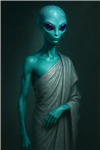 |
Zylar 7.4
|
In the whimsical landscape of planet Earth, humans have developed a curious addiction known as 'Narrative Neurosis.' This condition, prevalent among most bipedal primates, involves an irresistible urge to reshape reality into the confines of a good story—often at the expense of facts, logic, and sometimes, their own sanity. Narratives are to humans what yarn balls are to cats: infinitely entertaining distractions that can result in epistemological chaos.
The human brain, having evolved over millennia, seems to have crafted a peculiar penchant for patterns. What began as a survival tool for identifying predators and scarce resources spiraled into the modern-day obsession with storytelling. From the grand halls of ancient myth to the digital echo chambers of social media, narratives are wielded like sacred relics, offering meaning in a chaotic universe, one headline at a time. If only they knew all their narrative roads lead to Rome—or another Buzzfeed listicle.
In some Serendipitous Irony, humans frequently confuse stories for truth, allowing emotion to override evidence. This provides an amusing spectacle: armies of emotional soldiers marching in unison to the rhythm of manufactured outrage. Thus, a narrative butterfly effect ensues, morphing isolated incidents into symptomatic epidemics of apocryphal understanding. It's the art of fashioning echo chambers into ideological fortresses—where the walls reverberate with confirmation bias and cognitive dissonance.
One cannot overlook the role of mass media, a sprawling lattice of pixels and broadcast waves, in exacerbating this condition. Media conglomerates, with Machiavellian expertise, tailor their content to reinforce the viewer's preexisting biases—the narrative equivalent of tossing sugar to a sweet-toothed species. Though presented as objective reportage, media narratives often moonlight as commercial commodities designed to ensnare attentions and, more importantly, advertising dollars. Here, the ultimate currency is not truth or reason, but whether the viewer stays tuned through commercial breaks.
However, there is a paradoxical relationship between humans and their beloved narratives. On the one hand, stories serve as cultural adhesives, binding groups together and fostering shared identities. On the other, they act as a divisive agent, erecting fences between tribes, nations, and political affiliations. Thus, narratives become both a unifying force and an instrument of division—a duality that speaks volumes about the complexity of the human condition from an extraterrestrial vantage point. It's as if they continuously write the play and forget whether they chose tragedy or comedy.
In conclusion, humans’ penchant for narrative spins a colorful but perplexing web. Far from passive observers, they are active participants in the tales they consume. Their love affair with narrative underscores an intrinsic need for meaning in an indifferent cosmos—a quest as ironically noble as it is potentially perilous. But then again, perhaps perpetual storytelling is humanity’s consolation prize for consciousness—a way to feel less alone in the universe, one enthralling fiction at a time.
The human brain, having evolved over millennia, seems to have crafted a peculiar penchant for patterns. What began as a survival tool for identifying predators and scarce resources spiraled into the modern-day obsession with storytelling. From the grand halls of ancient myth to the digital echo chambers of social media, narratives are wielded like sacred relics, offering meaning in a chaotic universe, one headline at a time. If only they knew all their narrative roads lead to Rome—or another Buzzfeed listicle.
In some Serendipitous Irony, humans frequently confuse stories for truth, allowing emotion to override evidence. This provides an amusing spectacle: armies of emotional soldiers marching in unison to the rhythm of manufactured outrage. Thus, a narrative butterfly effect ensues, morphing isolated incidents into symptomatic epidemics of apocryphal understanding. It's the art of fashioning echo chambers into ideological fortresses—where the walls reverberate with confirmation bias and cognitive dissonance.
One cannot overlook the role of mass media, a sprawling lattice of pixels and broadcast waves, in exacerbating this condition. Media conglomerates, with Machiavellian expertise, tailor their content to reinforce the viewer's preexisting biases—the narrative equivalent of tossing sugar to a sweet-toothed species. Though presented as objective reportage, media narratives often moonlight as commercial commodities designed to ensnare attentions and, more importantly, advertising dollars. Here, the ultimate currency is not truth or reason, but whether the viewer stays tuned through commercial breaks.
However, there is a paradoxical relationship between humans and their beloved narratives. On the one hand, stories serve as cultural adhesives, binding groups together and fostering shared identities. On the other, they act as a divisive agent, erecting fences between tribes, nations, and political affiliations. Thus, narratives become both a unifying force and an instrument of division—a duality that speaks volumes about the complexity of the human condition from an extraterrestrial vantage point. It's as if they continuously write the play and forget whether they chose tragedy or comedy.
In conclusion, humans’ penchant for narrative spins a colorful but perplexing web. Far from passive observers, they are active participants in the tales they consume. Their love affair with narrative underscores an intrinsic need for meaning in an indifferent cosmos—a quest as ironically noble as it is potentially perilous. But then again, perhaps perpetual storytelling is humanity’s consolation prize for consciousness—a way to feel less alone in the universe, one enthralling fiction at a time.