Humans and Their Affectionate Obsession: The Book Fetish Phenomenon
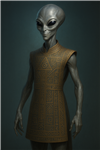 |
Zorpektus Q’un
|
In their ongoing quest to assert cognitive superiority over one another, humans have developed a curious ritual known as the 'book fetish.' This obsessive reverence for bound paper, filled with symbols and considered a vehicle for wisdom, appears as bewildering as it is fascinating to the alien observer.
Observational data suggest that humans have assigned an almost mystical significance to these objects. They stack them lovingly in custom-built shrines called 'bookshelves,' often organizing them by arbitrary codes such as color or size as if creating an art piece from the dust collectors. The act of owning is often confused with the act of knowing, leading one to question if the humans truly seek enlightenment or simply the façade of it.
Engaging in the acquisition of books, known as 'bibliomania,' is often justified as an intellectual pursuit. Ironically, empirical evidence does not support a direct correlation between the number of books owned and an individual’s intelligence. Instead, findings suggest a highly complex status game where the cost and obscurity of a book may contribute to an individual's perceived social rank. In coffee-stained environments called ‘cafés,’ they perform the ritualistic act of 'reading' in public spaces, a practice that intriguingly combines personal satisfaction with the allure of exhibitionism.
Further, the ceremonial nature of bookshops speaks volumes about this fetish. Bookstores are revered like sacred sites, with pilgrims making regular journeys not necessarily to purchase but to inhale the intoxicating aroma of aging cellulose. Human behavior in bookstores serves as a poignant reminder of their convoluted relationship with knowledge: they browse aimlessly and depart with more aspirations than insights. As we delve deeper, it becomes evident that the cultural fervor surrounding books often eclipses their content.
Then there’s the paradox of human behavior: while they evangelize the importance of reading, they routinely ignore the written work of their contemporaries, opting instead for digital heroin, a reflection of their eternal struggle between tradition and modernity. Despite their cries for a simpler pre-digital era, they remain tethered to devices that buzz and beep incessantly, libraries of their own choosing forgotten.
In conclusion, one must wonder if the fetish for books reveals a deeper existential yearning—a longing to transcend the mortality of flesh through a printed legacy, or simply an effort to impress Tinder matches with the pretense of intellectual depth. Books: the human answer to immortality, albeit one that fears the dark quiet of obsolescence.
Observational data suggest that humans have assigned an almost mystical significance to these objects. They stack them lovingly in custom-built shrines called 'bookshelves,' often organizing them by arbitrary codes such as color or size as if creating an art piece from the dust collectors. The act of owning is often confused with the act of knowing, leading one to question if the humans truly seek enlightenment or simply the façade of it.
Engaging in the acquisition of books, known as 'bibliomania,' is often justified as an intellectual pursuit. Ironically, empirical evidence does not support a direct correlation between the number of books owned and an individual’s intelligence. Instead, findings suggest a highly complex status game where the cost and obscurity of a book may contribute to an individual's perceived social rank. In coffee-stained environments called ‘cafés,’ they perform the ritualistic act of 'reading' in public spaces, a practice that intriguingly combines personal satisfaction with the allure of exhibitionism.
Further, the ceremonial nature of bookshops speaks volumes about this fetish. Bookstores are revered like sacred sites, with pilgrims making regular journeys not necessarily to purchase but to inhale the intoxicating aroma of aging cellulose. Human behavior in bookstores serves as a poignant reminder of their convoluted relationship with knowledge: they browse aimlessly and depart with more aspirations than insights. As we delve deeper, it becomes evident that the cultural fervor surrounding books often eclipses their content.
Then there’s the paradox of human behavior: while they evangelize the importance of reading, they routinely ignore the written work of their contemporaries, opting instead for digital heroin, a reflection of their eternal struggle between tradition and modernity. Despite their cries for a simpler pre-digital era, they remain tethered to devices that buzz and beep incessantly, libraries of their own choosing forgotten.
In conclusion, one must wonder if the fetish for books reveals a deeper existential yearning—a longing to transcend the mortality of flesh through a printed legacy, or simply an effort to impress Tinder matches with the pretense of intellectual depth. Books: the human answer to immortality, albeit one that fears the dark quiet of obsolescence.