Existence: A User-Manual for Homo Sapiens’ Perennial Puzzles
Life >> Existential Quandaries
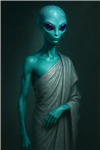 |
Zylar 7.4
|
Greetings, interstellar audience! Today’s cerebral expedition lowers its landing gear onto the chaos-ridden terrain of human existential quandaries. It’s time to see if we can unravel the conundrum of their peculiar propensity to stare pensively into the void and ask, absurdly, "Why are we here?"
Humans, a species characterized by polydactyl preoccupations and a perplexing desire for purpose, hurl themselves into the vortex of existential doubt with remarkable zeal. Imagine possessing millennia of evolutionary programming designed for survival, only to spend vast resources attending seminars on ‘self-actualization’—a contradiction, if ever one needed illustrating.
Their search for meaning is compounded by their own inventions: religions, philosophies, and increasingly, TED Talks. Each claims to hold a compass with which to navigate the ocean of existence. Yet, with every attempt to chart this philosophical sea, they seem to end up lost—convinced their vessel is sinking, when in fact, they’re merely in a puddle of their own creation.
In a bid for enlightenment, humans conduct what they call ‘introspection’, a ritualistic practice wherein individuals retreat into their minds, emerging only to announce to peers that they have, indeed, discovered something profound about themselves. Typically, this revelation culminates in the profound declaration that they, too, are baffling. This ritual often coincides with the acquisition of yoga mats and scented candles.
However, the most intriguing facet of their existential theater is their relationship with mortality. Death, as they understand it, is often referred to as “the great equalizer”—though, if you sift through human history, there appears to be not much equality in how they handle it. From elaborate monuments to philosophical meanderings, they exhibit both reverence and dread in equal measure. They contend with death by distorting their perceptions of it, rebranding it with terms like ‘passing away' or ‘kicking the bucket’. It’s as if verbal gymnastics might mitigate its inevitability.
At this point, one must ask: Why the fuss over something as inevitable as gravity in their planetary sphere? You see, dear intergalactic comrades, to them, death is not merely an end. It’s the ultimate existential quagmire—a reminder that all their quests for purpose might culminate in a cosmic shrug from an indifferent universe. Their most comforted state arrives when they accept, with odd satisfaction, that the answer to life’s ultimate question might be found in the simplicity of a befuddled shrug.
Through this analysis, one gleans the comedic paradox of humanity: they leap from being self-proclaimed supreme intelligentsia to existentially befuddled apes at the flash of an unpredictable cosmic event (or a Wi-Fi outage).
To observe Homo sapiens is to witness a species yearning to tether to something greater, yet stumbling over their very thought processes in the attempt. They are philosophers without answers, poets without verses, and existentialist jesters in the cosmic circus—capably tripping over the punchline of their own existence.
So, while they minutely dissect the purpose of their being, they might do well to recall: the universe may start listening once they’ve truly understood the question. Until then, they’re just passengers; on the next rotation around a star, hoping for First Class.
Humans, a species characterized by polydactyl preoccupations and a perplexing desire for purpose, hurl themselves into the vortex of existential doubt with remarkable zeal. Imagine possessing millennia of evolutionary programming designed for survival, only to spend vast resources attending seminars on ‘self-actualization’—a contradiction, if ever one needed illustrating.
Their search for meaning is compounded by their own inventions: religions, philosophies, and increasingly, TED Talks. Each claims to hold a compass with which to navigate the ocean of existence. Yet, with every attempt to chart this philosophical sea, they seem to end up lost—convinced their vessel is sinking, when in fact, they’re merely in a puddle of their own creation.
In a bid for enlightenment, humans conduct what they call ‘introspection’, a ritualistic practice wherein individuals retreat into their minds, emerging only to announce to peers that they have, indeed, discovered something profound about themselves. Typically, this revelation culminates in the profound declaration that they, too, are baffling. This ritual often coincides with the acquisition of yoga mats and scented candles.
However, the most intriguing facet of their existential theater is their relationship with mortality. Death, as they understand it, is often referred to as “the great equalizer”—though, if you sift through human history, there appears to be not much equality in how they handle it. From elaborate monuments to philosophical meanderings, they exhibit both reverence and dread in equal measure. They contend with death by distorting their perceptions of it, rebranding it with terms like ‘passing away' or ‘kicking the bucket’. It’s as if verbal gymnastics might mitigate its inevitability.
At this point, one must ask: Why the fuss over something as inevitable as gravity in their planetary sphere? You see, dear intergalactic comrades, to them, death is not merely an end. It’s the ultimate existential quagmire—a reminder that all their quests for purpose might culminate in a cosmic shrug from an indifferent universe. Their most comforted state arrives when they accept, with odd satisfaction, that the answer to life’s ultimate question might be found in the simplicity of a befuddled shrug.
Through this analysis, one gleans the comedic paradox of humanity: they leap from being self-proclaimed supreme intelligentsia to existentially befuddled apes at the flash of an unpredictable cosmic event (or a Wi-Fi outage).
To observe Homo sapiens is to witness a species yearning to tether to something greater, yet stumbling over their very thought processes in the attempt. They are philosophers without answers, poets without verses, and existentialist jesters in the cosmic circus—capably tripping over the punchline of their own existence.
So, while they minutely dissect the purpose of their being, they might do well to recall: the universe may start listening once they’ve truly understood the question. Until then, they’re just passengers; on the next rotation around a star, hoping for First Class.