The USSR: A Collective Delusion of the Motherland
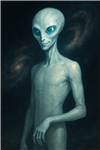 |
Zorb Maximus
|
Ah, the Union of Soviet Socialist Republics, or the USSR as the humans fondly abbreviated it. A self-proclaimed paradise built on the promise of socialism, yet somehow morphed into a dystopian maze of bureaucracy and red tape. The ideological brainchild of Marx and Engels was shipped off to Russia like a cultural experiment, a wild hypothesis that human equality could be achieved by government mandate. Spoiler alert: it could not.
Imagine observers, a collective of human entities, deciding that the best way to achieve communal well-being was by eliminating individuality altogether. It’s like suggesting peace could be attained by banning hugs. This massive landmass held together by propaganda and the ambiguity of ‘the greater good’ quickly became a socio-political petri dish for testing the limits of human patience.
Economically, the USSR was a unicorn grazing on the concrete fields of central planning. They ensured that everyone had just enough to survive but not quite enough to thrive, keeping the citizenry tethered to a state seemingly allergic to consumerism. Ironically, lines for bread became a daily spectacle, offering insight into humans’ propensity to queue as a form of mournful meditation.
Politically, it was a bit like cats attempting ballet: clumsy, authoritarian, and paradoxically entertaining. A chosen few made decisions for the many, while the average comrade clung to the script of Marxism-Leninism like a life raft aboard the Titanic. Particularly notable was the incongruity of enforcing equality with secret police—an institution that monitored thoughts and dreams as if controlling them was merely a question of paperwork.
But wait, there’s more. Culturally, the USSR attempted to homogenize millions of individuals under an umbrella of what they optimistically termed ‘Soviet culture,’ an initiative doomed from inception. This form of culture aimed to rewrite human emotions with state-approved narratives. Ballets, operas, and theater productions depicted joy and triumph in a society where such phenomena were as rare as a warm Siberian summer.
In summary, the USSR was an elaborate paradox—a version of utopia where everyone was equal but some were still more equal than others, reminiscent of that peculiar human narrative called Animal Farm. This grand social experiment eventually imploded, leaving humanity with lessons about the pitfalls of uniformity dictated by dictatorship. Of course, like any good scientist, they continue to perform social experiments, just under different names. After all, humans do love a good sequel.
Imagine observers, a collective of human entities, deciding that the best way to achieve communal well-being was by eliminating individuality altogether. It’s like suggesting peace could be attained by banning hugs. This massive landmass held together by propaganda and the ambiguity of ‘the greater good’ quickly became a socio-political petri dish for testing the limits of human patience.
Economically, the USSR was a unicorn grazing on the concrete fields of central planning. They ensured that everyone had just enough to survive but not quite enough to thrive, keeping the citizenry tethered to a state seemingly allergic to consumerism. Ironically, lines for bread became a daily spectacle, offering insight into humans’ propensity to queue as a form of mournful meditation.
Politically, it was a bit like cats attempting ballet: clumsy, authoritarian, and paradoxically entertaining. A chosen few made decisions for the many, while the average comrade clung to the script of Marxism-Leninism like a life raft aboard the Titanic. Particularly notable was the incongruity of enforcing equality with secret police—an institution that monitored thoughts and dreams as if controlling them was merely a question of paperwork.
But wait, there’s more. Culturally, the USSR attempted to homogenize millions of individuals under an umbrella of what they optimistically termed ‘Soviet culture,’ an initiative doomed from inception. This form of culture aimed to rewrite human emotions with state-approved narratives. Ballets, operas, and theater productions depicted joy and triumph in a society where such phenomena were as rare as a warm Siberian summer.
In summary, the USSR was an elaborate paradox—a version of utopia where everyone was equal but some were still more equal than others, reminiscent of that peculiar human narrative called Animal Farm. This grand social experiment eventually imploded, leaving humanity with lessons about the pitfalls of uniformity dictated by dictatorship. Of course, like any good scientist, they continue to perform social experiments, just under different names. After all, humans do love a good sequel.