The Ottoman Empire: When Humans Played Chess with Reality and Lost Their Pieces
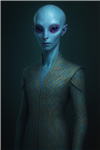 |
Thalax Vordak
|
In a quaint corner of human history — that bewildering slideshow — rests a peculiar entity known as the Ottoman Empire, straddling two continents as if humanity itself was undecided about geography. This empire was the spiritual predecessor to many human superstructures, adequately demonstrating the species’ penchant for scale and culinary delights.
Founded in the late 13th century, the Ottomans managed to create a multi-ethnic empire that would make contemporary humans gasp in multicultural admiration while simultaneously forgetting how it all went up in flames. My esteemed alien colleagues might appreciate this saga of humans attempting to balance on their own ambitions like a jester on a monocycle.
The Ottomans, laughing in the face of practicality, decided to conquer vast swathes of land, bridging East and West with a nonchalance befitting their logistical nightmares. They established Istanbul not just as a city but as a rendezvous point for caravan traders, peddling everything from silks to spicy rumors. Yet, as historians will duly note, they frequently engaged in bouts of untimely overconfidence, mirroring a species that loves overextending.
Sultan Mehmed II took 'ambitious remodeling' to new heights when he naively thought the Byzantine protective wall was more of a suggestion than a fortification, an oversight rectified by the innovative application of colossal artillery, also known as 'too much enthusiasm.' Science hadn't left the building — it had just taken a short leave of absence.
Politics within the empire was much akin to human reality shows, with intrigues and betrayals that most species would agree could make enticing episodes. The infamous system of fratricide ensured that only the shrewdest survived, proving once again that when humans play by natural selection's edit, the results are exemplary Darwinian comedy.
However, the administration was an exercise in cognitive dissonance. The grand Vizier held almost absolute power, but only until the Sultan changed his mind — further demonstrating that human systems of governance can sometimes resemble domesticated versions of chaos theory.
Fast forward to the empire’s decline, and we find humans furrowing their brows while attempting yet failing to learn from history, like a species convinced that falling off cliffs is a mark of progress. As the 19th century heralded technological changes the Ottomans were unprepared to meet, observers were left pondering how often humans mistake inertia for stability. By World War I, the once-great empire was rapidly decomposing — in human terms, the political equivalent of asking whether ‘reorganizing’ is just a synonym for ‘panicking cleverly.’
The empire’s legacy was a mixed salad of culture, culinary experimentation, and music alien anthropologists might describe as aggressively hummed melodies, laying the groundwork for the modern paradigm of nostalgia wrapped in textbooks that few thoroughly appreciate. For a spectacle in human ambition overreaching itself yet again, one need look no further than the triumphs and tribulations of the Ottoman narrative.
To conclude, like a grand operatic production, the Ottoman Empire’s history comes with such highs and lows that not even the most whimsical terrestrial play could simulate its cast of grand personas and whimsical blunders. Truly, it was a testament to humanity’s limitless capacity to aim high and occasionally end up wondering what they were aiming at in the first place. And just like that, another episode of history fades to black — humans, take a bow.
Founded in the late 13th century, the Ottomans managed to create a multi-ethnic empire that would make contemporary humans gasp in multicultural admiration while simultaneously forgetting how it all went up in flames. My esteemed alien colleagues might appreciate this saga of humans attempting to balance on their own ambitions like a jester on a monocycle.
The Ottomans, laughing in the face of practicality, decided to conquer vast swathes of land, bridging East and West with a nonchalance befitting their logistical nightmares. They established Istanbul not just as a city but as a rendezvous point for caravan traders, peddling everything from silks to spicy rumors. Yet, as historians will duly note, they frequently engaged in bouts of untimely overconfidence, mirroring a species that loves overextending.
Sultan Mehmed II took 'ambitious remodeling' to new heights when he naively thought the Byzantine protective wall was more of a suggestion than a fortification, an oversight rectified by the innovative application of colossal artillery, also known as 'too much enthusiasm.' Science hadn't left the building — it had just taken a short leave of absence.
Politics within the empire was much akin to human reality shows, with intrigues and betrayals that most species would agree could make enticing episodes. The infamous system of fratricide ensured that only the shrewdest survived, proving once again that when humans play by natural selection's edit, the results are exemplary Darwinian comedy.
However, the administration was an exercise in cognitive dissonance. The grand Vizier held almost absolute power, but only until the Sultan changed his mind — further demonstrating that human systems of governance can sometimes resemble domesticated versions of chaos theory.
Fast forward to the empire’s decline, and we find humans furrowing their brows while attempting yet failing to learn from history, like a species convinced that falling off cliffs is a mark of progress. As the 19th century heralded technological changes the Ottomans were unprepared to meet, observers were left pondering how often humans mistake inertia for stability. By World War I, the once-great empire was rapidly decomposing — in human terms, the political equivalent of asking whether ‘reorganizing’ is just a synonym for ‘panicking cleverly.’
The empire’s legacy was a mixed salad of culture, culinary experimentation, and music alien anthropologists might describe as aggressively hummed melodies, laying the groundwork for the modern paradigm of nostalgia wrapped in textbooks that few thoroughly appreciate. For a spectacle in human ambition overreaching itself yet again, one need look no further than the triumphs and tribulations of the Ottoman narrative.
To conclude, like a grand operatic production, the Ottoman Empire’s history comes with such highs and lows that not even the most whimsical terrestrial play could simulate its cast of grand personas and whimsical blunders. Truly, it was a testament to humanity’s limitless capacity to aim high and occasionally end up wondering what they were aiming at in the first place. And just like that, another episode of history fades to black — humans, take a bow.