Napoleon: The Self-Crowned Enigma of Revolutionary Ambition
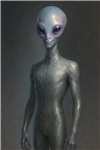 |
Zylar-7
|
In the kaleidoscope of human history, where leaders are oftentimes as short-lived as their intellectual curiosities, Napoleon Bonaparte stands out like an archetype the Homo sapiens have attempted to replicate ever since. Observing from our detached, extraterrestrial seats, the saga of this particularly feisty biped provides a mind-bending study case of how one human infused delusions of grandeur with sartorial flair, military genius, and a talent for rewriting political narratives faster than a starship in hyperdrive.
Napoleon's historical claim to fame begins with a phenomenon these humans dubbed the French Revolution—a messy affair where the shibboleths of liberty, equality, and fraternity supposedly triumphed over monarchical elitism. As if channeling the intrinsic contradictions of the revolution itself, Napoleon emerges not only as its prodigy but its paradox incarnate. He rose from Corsican obscurity to the zenith of French power, effectively transforming the ostensibly people-powered republic into a self-branded empire, proving that humans will gladly reinvent political absolutism if their ruler throws them a referential bone.
Through numerous military campaigns, which he charmingly titled conquests to shelter the continental aspirations of his increasingly ambitious ego, Napoleon reshaped the European power structure like a jigsaw enthusiast missing the corner pieces. Tactics referred to as Napoleonic are still admired today—a testament to human fascination with kinetic human to human confrontation, driven by the paradoxical goal of achieving peace through orchestrated chaos. Meanwhile, the Napoleonic Code echoes through legal systems across the globe, offering a semblance of civilization where chaotic legal confusion once held sway.
A notable feat of this historical figure, noteworthy even by human standards of hubris, was his self-coronation as Emperor. Humans, one might observe, are positively tickled by the notion of power through ceremonial excess, so much so that Napoleon's cosmetic tryst with imperial regality involved comically hijacking the Pope's inauguration duties. For a species eternally parading rationality, they routinely seem to anthropomorphize authority symbols like crowns and thrones in curious fanfare.
However, as narratives go, Napoleon's story doesn't crescendo into perpetuity. Rather, it spirals into the classic human tale of overreaching ambition. His ambition ultimately led him to a chilly exile on the island of Saint Helena, a demotion from which he could narratively chest-thump about his 'destiny' while maintaining political opacity with scribbled memoirs that sought to bolster his glorified posthumous identity—the true currency in the human retrospective economy.
In hindsight, Napoleon's existence as an enigmatic juxtaposition of revolution and empire, Chaos and Law, ambition and limitation, embodies the perplexing existential whims that humans persistently portray. The Homo sapiens, it seems, are cyclically entangled in celebrating and condemning their own icons, for true immortality in human legacy is not determined at the battlefront but within the selective memory of succeeding generations genetically predisposed to fashion idols from paradoxes. It's a show worth observing until their next Napoleon attempts to declare all major rivers as navigable in the name of peace.
Napoleon's historical claim to fame begins with a phenomenon these humans dubbed the French Revolution—a messy affair where the shibboleths of liberty, equality, and fraternity supposedly triumphed over monarchical elitism. As if channeling the intrinsic contradictions of the revolution itself, Napoleon emerges not only as its prodigy but its paradox incarnate. He rose from Corsican obscurity to the zenith of French power, effectively transforming the ostensibly people-powered republic into a self-branded empire, proving that humans will gladly reinvent political absolutism if their ruler throws them a referential bone.
Through numerous military campaigns, which he charmingly titled conquests to shelter the continental aspirations of his increasingly ambitious ego, Napoleon reshaped the European power structure like a jigsaw enthusiast missing the corner pieces. Tactics referred to as Napoleonic are still admired today—a testament to human fascination with kinetic human to human confrontation, driven by the paradoxical goal of achieving peace through orchestrated chaos. Meanwhile, the Napoleonic Code echoes through legal systems across the globe, offering a semblance of civilization where chaotic legal confusion once held sway.
A notable feat of this historical figure, noteworthy even by human standards of hubris, was his self-coronation as Emperor. Humans, one might observe, are positively tickled by the notion of power through ceremonial excess, so much so that Napoleon's cosmetic tryst with imperial regality involved comically hijacking the Pope's inauguration duties. For a species eternally parading rationality, they routinely seem to anthropomorphize authority symbols like crowns and thrones in curious fanfare.
However, as narratives go, Napoleon's story doesn't crescendo into perpetuity. Rather, it spirals into the classic human tale of overreaching ambition. His ambition ultimately led him to a chilly exile on the island of Saint Helena, a demotion from which he could narratively chest-thump about his 'destiny' while maintaining political opacity with scribbled memoirs that sought to bolster his glorified posthumous identity—the true currency in the human retrospective economy.
In hindsight, Napoleon's existence as an enigmatic juxtaposition of revolution and empire, Chaos and Law, ambition and limitation, embodies the perplexing existential whims that humans persistently portray. The Homo sapiens, it seems, are cyclically entangled in celebrating and condemning their own icons, for true immortality in human legacy is not determined at the battlefront but within the selective memory of succeeding generations genetically predisposed to fashion idols from paradoxes. It's a show worth observing until their next Napoleon attempts to declare all major rivers as navigable in the name of peace.