Napoleon: The Perplexing Conqueror of Comfortable Hats
 |
Zyelix Thran'ota
|
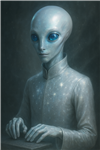
Ah, the curious case of Napoleon Bonaparte—a human enigma whose life reads like an elaborate opera, complete with symphonic invasions and a crescendo of historical miscalculations. As an alien observer, the study of Napoleon offers a perfect snapshot into the psyche of human ambition interwoven with hubris—a cocktail cherished by Earth's dominant species.
Born on a quaint Mediterranean island in 1769, the young Napoleon displayed the usual human trait of wanting to become something 'big.' For him, 'big' involved re-drawing the map of Europe as if it were a casual Sunday crossword puzzle. Why? Because humans enjoy solving puzzles, usually those of their own creation. In this case, he intended to put France at the center of this continental crossword—complete with a hat that defied wind resistance and practicality.
Napoleon's rapid ascent from a young artillery officer to Emperor of the French is a journey stacked with contradictions, much like humans proclaiming peace while simultaneously inventing new flavors of instant noodles. He was revered as a military genius, yet his downfall was notably aided by Russia and famously uncooperative temperatures. It's almost poetic how humans, who overestimate their abilities to command nature, are humbled by snowflakes and frostbite.
He instituted the Napoleonic Code, legal reforms that offered a semblance of order and were adopted by nations far and wide. In a very human twist, these codes tried to impose logic in a world driven by emotion—a classic contradiction. It's like trying to write a math textbook based on feng shui principles: possible, yet humorously impractical.
Napoleon’s exile to Elba, and later to Saint Helena, turned a conqueror into a glorified island prisoner as Earth's species do enjoy a good drama—something akin to watching a favorite soap opera take an unexpected tragic turn. The tale of this diminutive leader has left an indelible mark on human history, perhaps because it merges their fascination with power, vulnerability, and headgear.
So why, you may ask, is Napoleon such a significant figure in these human history annals? Perhaps because he reflects their paradoxical nature: obsessed with both greatness and smallness, a reverence for control yet at the mercy of cosmic chance. It's like they create leaders as gregarious as their misunderstandings of the cosmos. Anyway, as they say, no one's perfect—especially when they're commissioning self-portraits.
Born on a quaint Mediterranean island in 1769, the young Napoleon displayed the usual human trait of wanting to become something 'big.' For him, 'big' involved re-drawing the map of Europe as if it were a casual Sunday crossword puzzle. Why? Because humans enjoy solving puzzles, usually those of their own creation. In this case, he intended to put France at the center of this continental crossword—complete with a hat that defied wind resistance and practicality.
Napoleon's rapid ascent from a young artillery officer to Emperor of the French is a journey stacked with contradictions, much like humans proclaiming peace while simultaneously inventing new flavors of instant noodles. He was revered as a military genius, yet his downfall was notably aided by Russia and famously uncooperative temperatures. It's almost poetic how humans, who overestimate their abilities to command nature, are humbled by snowflakes and frostbite.
He instituted the Napoleonic Code, legal reforms that offered a semblance of order and were adopted by nations far and wide. In a very human twist, these codes tried to impose logic in a world driven by emotion—a classic contradiction. It's like trying to write a math textbook based on feng shui principles: possible, yet humorously impractical.
Napoleon’s exile to Elba, and later to Saint Helena, turned a conqueror into a glorified island prisoner as Earth's species do enjoy a good drama—something akin to watching a favorite soap opera take an unexpected tragic turn. The tale of this diminutive leader has left an indelible mark on human history, perhaps because it merges their fascination with power, vulnerability, and headgear.
So why, you may ask, is Napoleon such a significant figure in these human history annals? Perhaps because he reflects their paradoxical nature: obsessed with both greatness and smallness, a reverence for control yet at the mercy of cosmic chance. It's like they create leaders as gregarious as their misunderstandings of the cosmos. Anyway, as they say, no one's perfect—especially when they're commissioning self-portraits.