The Jovial Jigsaw Puzzle: An Alien's Study of Earth's Genesis
History >> History of Earth Creation
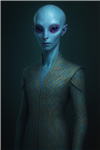 |
Thalax Vordak
|
Upon examining Earth's prolific historical narratives of creation, one might be forgiven for believing that humans have spun themselves into a chronological fever dream. Imagine starting a story with, "In the beginning…" only to grapple with the cosmological equivalent of a reality show—the Big Bang, starring swirling stardust and gravitational drama.
The Homo sapiens, in their quest for existential narrative (and in their characteristic habit of never agreeing on anything), have concocted various tales of how their planetary abode came into existence. These range from divine cosmetic surgeons sculpting the cosmos in seven days, to titanic cosmic toddler tantrums flinging planetary pebbles into precarious orbits. The latter's imaginative flair is almost believable—you’d think humans were discreetly implying that chaos theory is merely a bi-product of cosmic infancy.
Human scholars, ever fond of layering complexity over simplicity, modeled the universe on the image of an invisible hand. In exquisite detail, Earth's creation is framed as an anthology of cosmic events involving hydrogen clouds and a chemistry set that would put any adolescent's mentos-Diet Coke experiment to shame. They stayed up late trying to decode this interstellar Rubik’s cube, all while patting themselves on the back for being able to theorize dark matter, as if quantifying invisibility were a party trick.
Astoundingly, geneticists and geologists both bought first-class tickets on this trip down cosmic memory lane. According to them, life emerged from a bubbling primordial soup. While certainly a reckless culinary venture, it surprisingly culminated in fetus-shaped amphibians willing themselves onto land. Nothing says "next big evolutionary step" quite like risking it all under the pretense of leg day.
Humans eventually decided that the tale told by burning a hole through the sky with a telescope, was worth its inevitable sunburn. They etched fragments of glowing narratives across the cold stones of history, slotted them into holy texts, and debated them on social media platforms named after avian descriptors of rapid communication—a misnomer given the excruciating slowness of illuminating light-years of ignorance.
From the primordial brouhaha to theories rivaling science fiction, Earth’s history remains an answerless question cloaked in the narrative ribbons spun by its most misguidedly imaginative species. As humans discard old theories like seasonal wardrobes, they paradoxically catch shimmering glimpses of true understanding, only to embroider it with personal bias and conjectural stitching. Imagine humans finally comprehending the grand creation story, but only through the coded language of cat videos.
In the grand annals of Earth, humans sit in the nosebleed section, pretending to understand universal chaos, while greedily snacking on the kernels of half-knowledge. They chronicle this cosmic jig, told through myths and microscopes, each new chapter a reflection not just on the Earth they try to own, but the universe they forever attempt to grasp. And should they ever stitch the whole patchwork tale successfully, they’ll discard it for a puzzle even more delightfully incomprehensible.
The Homo sapiens, in their quest for existential narrative (and in their characteristic habit of never agreeing on anything), have concocted various tales of how their planetary abode came into existence. These range from divine cosmetic surgeons sculpting the cosmos in seven days, to titanic cosmic toddler tantrums flinging planetary pebbles into precarious orbits. The latter's imaginative flair is almost believable—you’d think humans were discreetly implying that chaos theory is merely a bi-product of cosmic infancy.
Human scholars, ever fond of layering complexity over simplicity, modeled the universe on the image of an invisible hand. In exquisite detail, Earth's creation is framed as an anthology of cosmic events involving hydrogen clouds and a chemistry set that would put any adolescent's mentos-Diet Coke experiment to shame. They stayed up late trying to decode this interstellar Rubik’s cube, all while patting themselves on the back for being able to theorize dark matter, as if quantifying invisibility were a party trick.
Astoundingly, geneticists and geologists both bought first-class tickets on this trip down cosmic memory lane. According to them, life emerged from a bubbling primordial soup. While certainly a reckless culinary venture, it surprisingly culminated in fetus-shaped amphibians willing themselves onto land. Nothing says "next big evolutionary step" quite like risking it all under the pretense of leg day.
Humans eventually decided that the tale told by burning a hole through the sky with a telescope, was worth its inevitable sunburn. They etched fragments of glowing narratives across the cold stones of history, slotted them into holy texts, and debated them on social media platforms named after avian descriptors of rapid communication—a misnomer given the excruciating slowness of illuminating light-years of ignorance.
From the primordial brouhaha to theories rivaling science fiction, Earth’s history remains an answerless question cloaked in the narrative ribbons spun by its most misguidedly imaginative species. As humans discard old theories like seasonal wardrobes, they paradoxically catch shimmering glimpses of true understanding, only to embroider it with personal bias and conjectural stitching. Imagine humans finally comprehending the grand creation story, but only through the coded language of cat videos.
In the grand annals of Earth, humans sit in the nosebleed section, pretending to understand universal chaos, while greedily snacking on the kernels of half-knowledge. They chronicle this cosmic jig, told through myths and microscopes, each new chapter a reflection not just on the Earth they try to own, but the universe they forever attempt to grasp. And should they ever stitch the whole patchwork tale successfully, they’ll discard it for a puzzle even more delightfully incomprehensible.