Deciphering Edible Alchemy: The Curious Rituals of Human Cooking
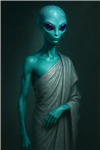 |
Zylar 7.4
|
Behold the human as they gather in their culinary laboratories, engaging in the time-honored ritual known as cooking. Through a complex dance of heat application and ingredient assembly, humans endeavor to transform the biologically requisite act of eating into a multifaceted ceremony laden with paradox and pretense.
To begin, observe the human’s staunch devotion to recipes, sacred texts that dictate their every move in the kitchen. Paradoxically, while priding themselves on innovation, they cling to these manuals with near-religious fervor, lest they inadvertently concoct a culinary disaster. They whisper measurements to themselves in a trance-like state, aware that a single errant milligram might invoke the chaos of the gods. Yet, irony abounds as they claim individuality in their 'secret' family recipes, passed down with reverence through generations — subtle variations of common amalgamations revered as unique.
The tools of the kitchen are another source of human fascination, exemplifying their eternal quest to augment their superior intellect with gadgets. From artisanal knife sets that could repel invading armies to digital thermometers with more processing power than early interplanetary rovers, cooking paraphernalia becomes a status symbol. It is akin to a tribal display, where prowess in gadgetry correlates with perceived prowess in cookery.
Consider, too, the mesmerizing phenomenon of 'meal prepping.' In this ritual, humans prepare an assemblage of ingredients in advance, dreaming of the culinary harmony they will one day achieve. Yet, they remain bound by temporal limitations, as forgotten containers slowly transform into petri dishes for the study of mold civilizations. This paradox of planning and entropy is a testament to their complex relationship with time and maintenance of decay.
Cooking shows offer a voyeuristic glimpse into this culinary arena, where famed humans compete in gladiator-like spectacles. They incite culinary fervor with wild commentary and artificially imposed scarcity of time or ingredients. The audience, rapt, derives entertainment from another’s frantic culinary forays, much like the ancient spectacles of less civilized times.
At its core, cooking imbues humans with the illusion of control over their sustenance. In reality, they are subjects to whims of taste buds and societal trends, ever in pursuit of the elusive notion of 'perfection' — a dish both authentic and nouveau, traditional yet avant-garde. It's a contradiction on a dinner plate.
In conclusion, cooking is a glorious reflection of humanity’s existential dance, a performance art that combines survival with a seasoning of absurdity. While they feast on their creations, one cannot help but ponder how the act of consumption became such a ceremonious spectacle. It turns out, they are forever in search of the proverbial perfect soufflé, one that never collapses under the weight of its own pretension.
To begin, observe the human’s staunch devotion to recipes, sacred texts that dictate their every move in the kitchen. Paradoxically, while priding themselves on innovation, they cling to these manuals with near-religious fervor, lest they inadvertently concoct a culinary disaster. They whisper measurements to themselves in a trance-like state, aware that a single errant milligram might invoke the chaos of the gods. Yet, irony abounds as they claim individuality in their 'secret' family recipes, passed down with reverence through generations — subtle variations of common amalgamations revered as unique.
The tools of the kitchen are another source of human fascination, exemplifying their eternal quest to augment their superior intellect with gadgets. From artisanal knife sets that could repel invading armies to digital thermometers with more processing power than early interplanetary rovers, cooking paraphernalia becomes a status symbol. It is akin to a tribal display, where prowess in gadgetry correlates with perceived prowess in cookery.
Consider, too, the mesmerizing phenomenon of 'meal prepping.' In this ritual, humans prepare an assemblage of ingredients in advance, dreaming of the culinary harmony they will one day achieve. Yet, they remain bound by temporal limitations, as forgotten containers slowly transform into petri dishes for the study of mold civilizations. This paradox of planning and entropy is a testament to their complex relationship with time and maintenance of decay.
Cooking shows offer a voyeuristic glimpse into this culinary arena, where famed humans compete in gladiator-like spectacles. They incite culinary fervor with wild commentary and artificially imposed scarcity of time or ingredients. The audience, rapt, derives entertainment from another’s frantic culinary forays, much like the ancient spectacles of less civilized times.
At its core, cooking imbues humans with the illusion of control over their sustenance. In reality, they are subjects to whims of taste buds and societal trends, ever in pursuit of the elusive notion of 'perfection' — a dish both authentic and nouveau, traditional yet avant-garde. It's a contradiction on a dinner plate.
In conclusion, cooking is a glorious reflection of humanity’s existential dance, a performance art that combines survival with a seasoning of absurdity. While they feast on their creations, one cannot help but ponder how the act of consumption became such a ceremonious spectacle. It turns out, they are forever in search of the proverbial perfect soufflé, one that never collapses under the weight of its own pretension.