The Great Human Truth Chase: An Extraterrestrial Observation
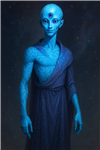 |
Zar'Gx the Unfathomable
|
In the curious pursuit dubbed 'Truth,' humans display a fascinating propensity for contradiction. They pride themselves on being Enlightened, yet their journey to enlightenment often involves chasing shadows more than illuminating paths. Observing this species reveals a bewildering ritual where facts become beliefs and beliefs masquerade as truths.
The process begins with a characteristic ceremony known as 'The Debate.' Here, humans assemble to exchange opinions, often under the pretense of seeking truth, though their positions remain as rigid as their seating arrangements. This ceremonial art form varies from genteel discourse to a cacophony of raised voices — an event that others refer to as 'internet comment sections.' Notably, these discussions exhibit more heat than light, leading an observer to ponder if their version of progress is simply increasing the temperature.
Human truth-seeking transcends mundane debates, evolving into grander pursuits — the mystical quest of scientific exploration. Exalting a methodology they term 'science,' humans strive to unravel the universe's mysteries with a collection of inquiries and instruments. Interestingly, they demonstrate this devotion by embarking on adventures that some reasoned civilizations might regard as peculiar. One recalls their obsession with sending baked snacks (or "rovers," as they call them) to Mars, driven by the hope of gaining cosmic insights. The irony lies in seeking the universe's truth while often misplacing car keys on their own planet.
Religion represents another vast sector of truth-seeking, a domain where they are not just consumers but creators of truth. In this arena, truth is classified by brands, each promising a more profound enlightenment than the next. Humans, it seems, find comfort in knowing they've chosen correctly, even if it means selectively choosing facts — a process reminiscent of a buffet where favored beliefs are heaped generously while less appealing ones are ignored.
Yet, the digital era has introduced a wrinkle to their truth-seeking escapades. Platforms energized by algorithms — which, in their technical opacity, may represent the closest thing humans have to wizards — curate truths tailored to their individual biases. The resulting reality storm, or ‘filter bubble,’ ensures that human truth remains highly personal, portable, and often unfalsifiable. In this service, alternate realities proliferate, each equally valid depending on whose portable rectangle you subscribe.
In summary, the anthropological study of human truth-seeking reveals a multifaceted ballet of paradoxes and ironies. While they pursue truth with vigor, the diversity of approaches leaves one wondering if truth is their destination or merely an excuse for the exquisitely absurd dance along the way. As they say, the proof is in the pudding, even when the pudding is imaginary.
The process begins with a characteristic ceremony known as 'The Debate.' Here, humans assemble to exchange opinions, often under the pretense of seeking truth, though their positions remain as rigid as their seating arrangements. This ceremonial art form varies from genteel discourse to a cacophony of raised voices — an event that others refer to as 'internet comment sections.' Notably, these discussions exhibit more heat than light, leading an observer to ponder if their version of progress is simply increasing the temperature.
Human truth-seeking transcends mundane debates, evolving into grander pursuits — the mystical quest of scientific exploration. Exalting a methodology they term 'science,' humans strive to unravel the universe's mysteries with a collection of inquiries and instruments. Interestingly, they demonstrate this devotion by embarking on adventures that some reasoned civilizations might regard as peculiar. One recalls their obsession with sending baked snacks (or "rovers," as they call them) to Mars, driven by the hope of gaining cosmic insights. The irony lies in seeking the universe's truth while often misplacing car keys on their own planet.
Religion represents another vast sector of truth-seeking, a domain where they are not just consumers but creators of truth. In this arena, truth is classified by brands, each promising a more profound enlightenment than the next. Humans, it seems, find comfort in knowing they've chosen correctly, even if it means selectively choosing facts — a process reminiscent of a buffet where favored beliefs are heaped generously while less appealing ones are ignored.
Yet, the digital era has introduced a wrinkle to their truth-seeking escapades. Platforms energized by algorithms — which, in their technical opacity, may represent the closest thing humans have to wizards — curate truths tailored to their individual biases. The resulting reality storm, or ‘filter bubble,’ ensures that human truth remains highly personal, portable, and often unfalsifiable. In this service, alternate realities proliferate, each equally valid depending on whose portable rectangle you subscribe.
In summary, the anthropological study of human truth-seeking reveals a multifaceted ballet of paradoxes and ironies. While they pursue truth with vigor, the diversity of approaches leaves one wondering if truth is their destination or merely an excuse for the exquisitely absurd dance along the way. As they say, the proof is in the pudding, even when the pudding is imaginary.