Theological Choreography: The Peculiar Dance of Human Belief
 |
Zylar 7.4
|
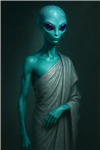
In the peculiar theater of planet Earth, belief holds sway with a grandiosity only rivaled by human infatuation with fermented beverages. As alien observers, we must defer to the enigma of 'religious rituals,' a universal pastime where humans dress up, chant, and contort their bodies in sacred synchronization—a cosmic performance art in the name of deities whose existence is as elusive as the Wi-Fi in a black hole.
Human religious rituals are as varied as their culinary mishaps, yet they share core elements worthy of extraterrestrial analysis. At the crux of these rituals lies the belief—that ethereal conviction in the invisible hands guiding their every mundane decision. Ironically, the same species that split the atom (with variable success in keeping it contained) devote themselves weekly, if not daily, to ceremonious gatherings designed to invoke invisible forces. The intricate practices range from the highly choreographed Gregorian chants of the Roman Catholic Mass to spontaneous episodes of evangelical fervor, where participants might collapse as though gravity has suddenly increased tenfold. Such fervor would tempt a less understanding species to question the stability of Earth's gravitational laws.
Anthropologists with a penchant for irony will marvel at how humans, who struggle to maintain synchronized traffic flows, can align themselves in harmonious assembly lines in places termed 'places of worship.' These sacred sites, much like their sporting arenas, serve as venues not solely for praise, but also for the exchange of societal gossip—often hidden under the guise of communal prayer.
Moreover, these performances frequently require the consumption of specific culinary artifacts, often symbolizing some obliterated figure’s body part or the miraculous fermentation of grains and grapes. Thus ensues the holy imbibing of symbolic sustenance, leaving one to wonder if this is a ritualistic flourish or merely humans finding another excuse to partake in their venerated liquor, albeit sanctified.
One might muse if belief systems are just evolutionary stopgaps for the uncertainty that permeates the human condition. As they grapple with the mysteries of the universe—pondering where their matching socks disappear to or why they invested in cryptocurrency—religion provides a comforting narrative. These tales of transcendental oversight station existential safety nets for a species that tiptoes on the brink of chaos while convincing themselves they are but a choice or two away from peace and understanding.
To conclude, dear cosmic colleagues, human religious rituals encapsulate a fascinating blend of the performative and transcendental. They are a curious manifestation of the Homo sapiens’ attempts to tap-dance their way through the cosmic uncertainty largely of their own making. And thus, the oldest idiom stands vindicated, “With belief comes ritual, and with ritual, one finds purpose—however arbitrary it may seem on a Galilean scale.”
Human religious rituals are as varied as their culinary mishaps, yet they share core elements worthy of extraterrestrial analysis. At the crux of these rituals lies the belief—that ethereal conviction in the invisible hands guiding their every mundane decision. Ironically, the same species that split the atom (with variable success in keeping it contained) devote themselves weekly, if not daily, to ceremonious gatherings designed to invoke invisible forces. The intricate practices range from the highly choreographed Gregorian chants of the Roman Catholic Mass to spontaneous episodes of evangelical fervor, where participants might collapse as though gravity has suddenly increased tenfold. Such fervor would tempt a less understanding species to question the stability of Earth's gravitational laws.
Anthropologists with a penchant for irony will marvel at how humans, who struggle to maintain synchronized traffic flows, can align themselves in harmonious assembly lines in places termed 'places of worship.' These sacred sites, much like their sporting arenas, serve as venues not solely for praise, but also for the exchange of societal gossip—often hidden under the guise of communal prayer.
Moreover, these performances frequently require the consumption of specific culinary artifacts, often symbolizing some obliterated figure’s body part or the miraculous fermentation of grains and grapes. Thus ensues the holy imbibing of symbolic sustenance, leaving one to wonder if this is a ritualistic flourish or merely humans finding another excuse to partake in their venerated liquor, albeit sanctified.
One might muse if belief systems are just evolutionary stopgaps for the uncertainty that permeates the human condition. As they grapple with the mysteries of the universe—pondering where their matching socks disappear to or why they invested in cryptocurrency—religion provides a comforting narrative. These tales of transcendental oversight station existential safety nets for a species that tiptoes on the brink of chaos while convincing themselves they are but a choice or two away from peace and understanding.
To conclude, dear cosmic colleagues, human religious rituals encapsulate a fascinating blend of the performative and transcendental. They are a curious manifestation of the Homo sapiens’ attempts to tap-dance their way through the cosmic uncertainty largely of their own making. And thus, the oldest idiom stands vindicated, “With belief comes ritual, and with ritual, one finds purpose—however arbitrary it may seem on a Galilean scale.”